AI Writing Needs A Reviewer
Readable AI text is not the same as good writing. The simplest fix is to separate the writer from the reviewer and let human judgment decide what survives.
Hello and welcome (back) to The Mindshift AI Inference!
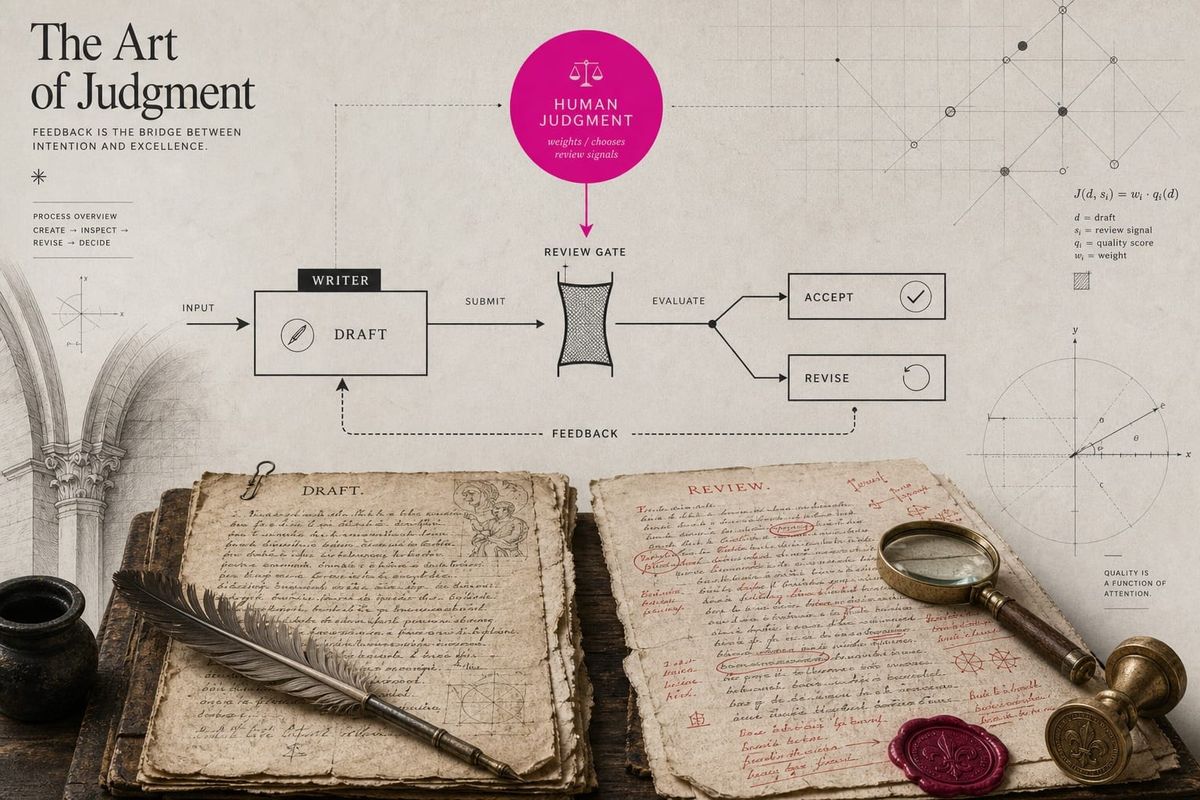
One of the simplest multi-agent patterns comes from software development. One person writes code, another person reviews it, and the reviewer is not there to be polite. The reviewer is there to find problems before the user does.
The same pattern applies to writing, especially AI-assisted writing.
The Problem With One-Step AI Writing
Most people write with AI like this: “Write me an article about X.” The AI writes something, and the result is usually readable.
That is the problem. Readable is not the same as good.
The argument may be generic. The structure may be too smooth. The examples may be weak. The tone may sound like thousands of other AI-written texts. Worse, the AI often sounds confident enough that you stop noticing the weaknesses.
This is why AI writing needs a reviewer.
Writing Is Several Jobs
Writing is not one activity. There is thinking, structure, drafting, style, fact-checking, editing, and taste. When one AI does all of that in one pass, you get a compromise.
The draft says: here is the idea. The reviewer says: not yet.
That tension is useful because it creates distance. The writer is close to the text, while the reviewer is close to the reader.
The writer asks: What am I trying to say? The reviewer asks: Will this land? Where is the claim weak? Where does the reader get bored? Where does this sound like AI filler?
That distance is the point.
The Human Role
The reviewer is not the boss. The reviewer is a tool for creating distance, and your job is to decide which criticism matters.
That is the pattern: create, inspect, revise, decide.
That is how you get from generated text to real writing.
Have a great day!
Matthias
P.S. For paying members, I also wrote the practical version: How To Build A Writer Reviewer Workflow.